
Learn about mining in GREECE

MINING NEWS

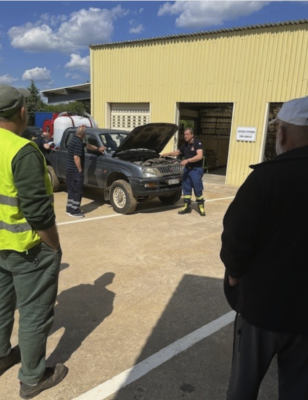
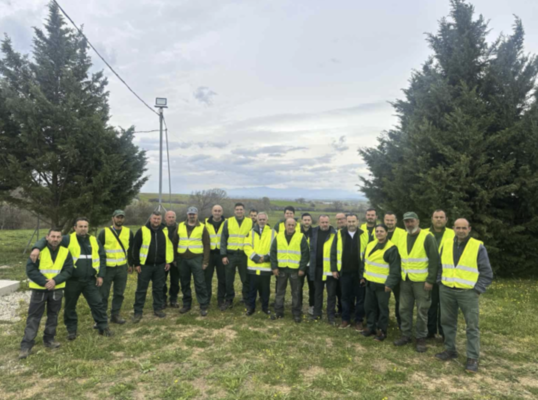
Safety in Practice: Fire Safety Training for the Employees of Thracean Mining

As part of its ongoing focus on safety, prevention, and preparedness, Thracean Mining organized a [...]

Leonidas Bakouras Successfully Completes His Tenure as General Manager of Thracean Mining

Thracean Mining announces that Mr. Leonidas Bakouras has successfully completed his tenure as General Manager [...]

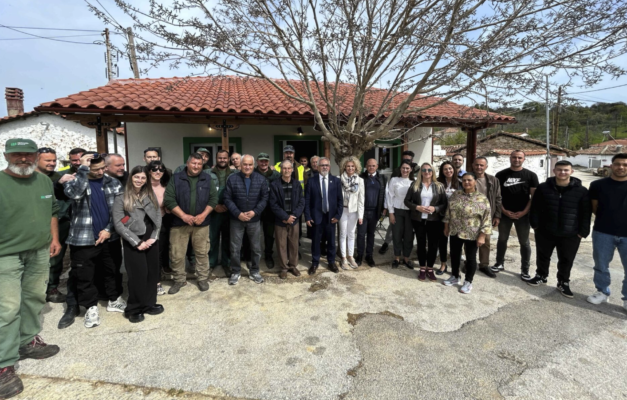
Thracean Mining: Community Information Center in Perama, Evros

Thracean Mining has established a Community Information Center in Perama, Evros, further reinforcing its commitment [...]

Thracean Mining: Establishment of a Plant Nursery in Perama, Evros, Focused on Environmental Sustainability and Local Development

Thracean Mining is advancing the development of a plant nursery in the Perama area of [...]

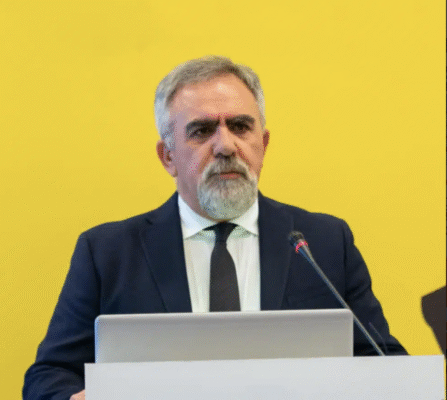
Thracean Mining at Money Show 2026

Today’s development is inseparable from mineral resources. The need to responsibly utilize mining potential is [...]

Participation of Thracean Mining and Hellas Gold in the 50th Anniversary Event of SEVE

Eldorado Gold, through its subsidiaries Hellas Gold and Thracean Mining, participated in the event marking [...]

Mining Projects

The northeastern side of Halkidiki has a long history which is mostly marked by the involvement of the inhabitants in the mining activity. More than 300 wells and approximately 200,000 square meters of ancient metallurgical waste are preserved in the area, commonly known as “skouria” (rust) from the overheating of minerals in furnaces that prove this fact.
Milos lies on the South Aegean volcanic arc. The volcanos of the island may be dormant today, however there are several indications on the island that its surface communicates with the interior of the Earth. These are indications that can be met in all volcanic arcs with signs of recent or older volcanism.

Nissiros volcano emerged from the sea 200,000 years ago to form a cone of land. As it continued to erupt over the following years, molten fragments of stone were released in the atmosphere, only to cool down again as they fell on the ground to eventually form layers of volcanic ash.